Broken bones (also known as fractured bones) are common for both children and adults. A broken bone occurs when a force exerted against the bone is stronger than it can structurally withstand. Most fractures are usually due to a fall, athletic activity, or car accident. The wrist, ankle, and hip are the most common sites for bone fractures and treatments include setting the broken bone in a cast or surgically pinning the bones back together.
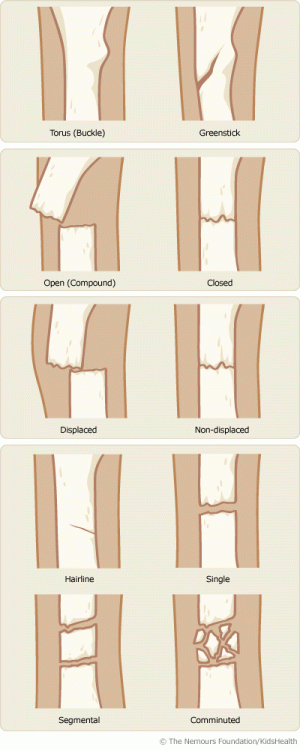
There are many different types of bone fractures, but they are generally placed into one of four different categories: Displaced, non-displaced, open, and closed.
Here are several different types of common bone fractures…
Torus fracture (or buckle fracture) – commonly seen in children due to softer bones, a torus fracture occurs when one side of the bone may buckle upon itself without disrupting the other side, also known as an incomplete fracture
Greenstick fracture – a small, slender crack in the bone, which is more common in children because of their flexible bones
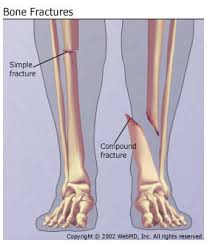
Open or compound fracture – the broken bone breaks through the skin
Closed or simple fracture – the broken bone has not pierced through the skin
Displaced fracture – the bone snaps in two or more parts and are no longer aligned
Non-displaced fracture – the bone cracks partly or completely but maintains proper alignment
Hairline fracture (or stress fracture) – often occurs from repetitive stress to the same bone
Single fracture – a single break in one bone
Segmental fracture – a fracture in two parts of the same bone
Comminuted fracture – the bone is shattered into multiple small pieces
Did you know you are born with over 270 bones? But, many of these fuse together as you grow, leaving a total of 206 separate bones in an adult! Broken bones (also known as fractured bones) are common for both children and adults. In our previous post, “How to Know if a Bone is Broken in Children“, we learned that most fractures are usually due to a fall, athletic activity, or car accident. In addition, some people can be more prone to breaks because of genetic conditions or bone disease that weakens bones.
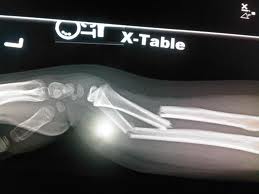
An X-ray image of a fractured radius showing the characteristic Colles’ fracture with displacement and angulation of the distal end of the radius.
Adults most commonly fracture leg and ankle bones, along with forearms. One-sixth of all fractures treated among adults are known as Colles’ fractures. A Colles’ fracture is a fracture of the distal radius in the forearm with dorsal (posterior) displacement of the wrist and hand (commonly referred to as a “dinner-fork” or “bayonet” fracture.) They are most common in the elderly and often seen in people with osteoporosis.
A doctor may suspect a fractured bone simply based on the appearance of the injured area. Following is a list of signs and symptoms you can use to help determine whether or not a bone is broken in an adult.
How to know if a bone is broken in adults:
Is the area swollen and bruised?
Is the limb hanging at a funny angle or look out of place?
Is the bone sticking out through the skin?
Did the injured person feel or hear anything crack?
Can they move the injured area?
Does it hurt when touched?
Most importantly, consult a doctor. X-rays of the injured area will usually confirm the diagnosis of a broken bone, although stress or hairline fractures can be difficult to detect on an x-ray. If the x-ray does not show a fracture, but after 7-10 days, there is still pain or something just doesn’t feel quite right, do not hesitate to ask for another. By that time, calcium “ribbons” will be visible. Calcium ribbons occur only when a bone has broken or suffered a Greenstick fracture (a mild bone fracture or bone bend.)
If you suspect a broken bone, do your very best to keep the injured area still, until you know for sure what type of orthopedic injury you are dealing with. Once you know you’re dealing with a fracture and have been casted, you’ll definitely want to visit CastCoverz! CastCoverz! provides fun and functional products that comfort orthopedic patients, from cast covers and walking boot covers, to colored crutches and CrutchWear crutch accessories, we’ve got you covered! OH, and don’t forget you’ll need to keep that cast DRY with DryPro waterproof cast protector, and for some much needed relief from that itchy, stinky cast, try CastCooler!
Most everyone I know has either fractured a bone or knows someone who has! The term “fracture” may sound serious, but it is just another term for a broken bone. Fact is, broken bones are very common, especially in childhood. Did you know broken bones are actually the fourth most common injury among children under age 6?
Most bone fractures in children happen due to falls, but that doesn’t mean that every fall results in a broken bone! If a child’s fall is greater than their height, there is greater risk of injury. It’s not always easy to determine if a fracture has occured, so just exactly how do you know if a bone is broken?
If a bone is fractured:
There may have been a snap or grinding noise during the injury.
You will usually see swelling, bruising, or tenderness around the injured area.
There will most likely be some pain involved.
Watch for signs of a child favoring their injured limb.
There can be a visible deformity, like a bump or change in the shape of the bone. However, if the broken bone is not displaced (when the pieces on either side of the break are out of line), it may be more difficult to determine if the bone is actually fractured.
Most importantly – visit your doctor. Only an x-ray will confirm if you have a broken bone! If after an x-ray, your child is still complaining of pain or something just isn’t quite right, do not hesitate to ask for another x-ray after 7-10 days. By that time, calcium “ribbons” will be visible. Calcium ribbons occur only when a bone has broken or suffered a greenstick fracture (a mild bone fracture or bone bend.)
If you suspect a broken bone, do your very best to keep the injured area still, until you know for sure what type of orthopedic injury you are dealing with. Once you know you’re dealing with a fracture and have been casted, you’ll definitely want to visit CastCoverz! CastCoverz! provides fun and functional products that comfort orthopedic patients, from cast covers and walking boot covers, to colored crutches and CrutchWear crutch accessories, we’ve got you covered! OH, and don’t forget you’ll need to keep that cast DRY with DryPro waterproof cast protector and for some much needed relief from that itchy, stinky cast, try CastCooler!